Bainbridge Island December 2025 Luxury Real Estate Market Report
Bainbridge Island Market Report Jake Aspinwall January 6, 2026
Bainbridge Island Market Report Jake Aspinwall January 6, 2026
TL;DR: December's 20 residential home sales marked the market's expected seasonal slowdown, down from November's 26 transactions and December 2024's 30 sales. The median price of $1.100M—down 17% from November's $1.327M—reflected concentration in the sub-$1M segment (35% of volume) rather than systematic value depreciation, while waterfront properties commanded a remarkable 95% premium ($900K) at $1.850M versus non-waterfront's $950K median. Properties moved in a median 23 days (39% faster than last December's 38 days), while the 99.1% list-to-sale ratio confirms sellers maintaining near-full pricing power. With 1.2 months of inventory, Bainbridge remains in seller's market territory as we close out a strong 2025.
December delivered Bainbridge's characteristic winter deceleration, though velocity and fundamentals remained healthy relative to seasonal norms.
| Metric | This Month | Last Month | Last Year |
|---|---|---|---|
| Total Homes Sold | 20 | 26 | 30 |
| Median Sale Price | $1.100M | $1.327M | $1.355M |
| Average Days on Market | 23 | 12 | 38 |
| List-to-Sale Price Ratio | 99.1% | 100.0% | 100.0% |
| Months of Inventory | 1.2 | 0.8 | ~1.0 |
December's $1.100M median—representing a 17% month-over-month decline from November's $1.327M and 19% year-over-year decrease from last December's $1.355M—reflects transaction composition concentrated in the sub-$1.5M bands rather than systematic value erosion. Seven properties (35% of December's volume) sold below $1M, including two homes in the $460K–$489K range that pulled the median downward. Conversely, only three luxury sales ($2M+) closed in December versus five in November, reducing top-end weight in the median calculation.
What the composition-adjusted numbers tell us: waterfront properties held firm at $1.850M median pricing (essentially matching November's $1.900M when accounting for different waterfront property types), demonstrating stable values in this premium segment. Non-waterfront homes at $950K median likewise showed consistency, with the overall median movement driven by the mix of transactions rather than per-property depreciation. The mean sale price of $1.305M—substantially above the $1.100M median—further confirms that higher-value properties maintained strength while the median was pulled downward by entry-level transaction concentration.
The velocity improvement remains notable: December's 23-day median represents 39% faster absorption than last December's 38-day pace, confirming sustained buyer urgency even during the slowest market period. November's extraordinary 12-day velocity was unsustainable, and December's normalization to 23 days represents healthier market rhythm—still exceptionally fast for winter but appropriately calibrated for seasonal conditions. The list-to-sale ratio of 99.1%—barely off November's 100% full-price standard—validates that sellers maintain near-complete pricing power when properties are positioned accurately.
Transaction volume declined predictably: 20 sales represented a 23% decrease from November's 26 and 33% decline from last December's 30, confirming traditional seasonal slowdown patterns. With 24 active listings pushing months of inventory to 1.2—still firmly in seller's market territory but 50% higher than November's 0.8 months—supply is normalizing without flooding the market. The inventory expansion reflects typical year-end dynamics: some sellers listing to capture motivated December buyers, others preparing for spring launches, combined with slower absorption as buyers pause for holidays.
The luxury market ($2M and above) demonstrated selective activity in December with three waterfront sales spanning $2.1M to $2.92M:
While respecting privacy, here are compelling transactions that showcase market trends:
Murden Cove Waterfront – $2.92M
South Beach Waterfront – $2.45M
Winslow In-Town Waterfront – $2.10M
Bainbridge Island's waterfront properties delivered December's most compelling performance, commanding substantial premiums that validate scarcity-driven value:
Waterfront Premium: December delivered a stunning validation of waterfront scarcity value—a $900,000 premium representing 95% over non-waterfront properties. While this marks the highest percentage premium we've documented, context matters: the calculation reflects waterfront properties maintaining $1.850M median pricing while several entry-level non-waterfront sales ($460K–$807K range) pulled that segment's median to $950K. The absolute dollar premium of $900K underscores the substantial value gap buyers must bridge to access water frontage on Bainbridge.
What's particularly notable: waterfront properties represented 45% of December's transaction volume—nine of 20 sales—an exceptionally high concentration suggesting that buyers prioritizing water access remained active during year-end purchasing decisions while some non-waterfront buyer segments paused for holidays. The 55-day average timeline for waterfront sales (versus 13 days for non-waterfront) reflects the narrower buyer pool at elevated price points, yet waterfront transactions are closing decisively once the right buyer emerges. All three luxury sales in December were waterfront properties, confirming this segment's enduring premium positioning.
The year-over-year comparison shows strengthening waterfront demand: nine waterfront sales this December versus seven last December represents 29% volume growth in this segment, while the broader market contracted 33%. This divergence underscores waterfront's enduring appeal—out-of-market buyers from California, Arizona, and greater Seattle continue viewing Bainbridge waterfront as exceptional relative value, particularly when compared to comparable water access in their home markets where similar frontage would command substantially higher absolute prices.
For waterfront sellers, the takeaway is clear: your asset class demonstrated remarkable resilience through December's seasonal slowdown. The sustained premium positioning and year-over-year volume growth confirm scarcity-driven pricing power, though the 55-day timeline means patience remains essential when marketing premium properties during winter months. The three successful luxury waterfront closings—all achieving 92–101% of asking price—validate that quality waterfront properties find serious buyers regardless of season when priced strategically.
December's activity concentrated in select neighborhoods, with Winslow accounting for 25% of island-wide volume:
Several factors influenced December's performance:
Seasonal Volume Contraction With Maintained Velocity
December's 20 transactions—down 23% from November's 26 and 33% from last December's 30—confirms textbook seasonal deceleration as buyers and sellers pause for holidays and year-end priorities. However, the 23-day median sale timeline tells a different story: this represents 39% faster absorption than last December's 38-day pace, demonstrating that properties moving to market in December still attract decisive buyer action. November's 12-day velocity was unsustainable—a hot market anomaly rather than equilibrium—and December's normalization to 23 days reflects appropriate seasonal calibration while remaining exceptionally fast for winter conditions. Serious buyers with compelling reasons to purchase (relocations, life changes, tax considerations) don't pause for the calendar, and December's velocity confirms these buyers continue acting decisively on well-positioned properties.
Price Composition Rather Than Value Erosion
December's $1.100M median—down 17% from November's $1.327M—requires nuanced interpretation. Seven properties (35% of volume) sold below $1M, including two in the $460K–$489K range, while only three luxury sales closed above $2M. This concentration in entry-level segments pulled the median downward without indicating per-property value depreciation. When examining like-for-like comparisons, fundamentals held firm: waterfront properties maintained $1.850M median pricing (essentially matching November when accounting for property mix), luxury waterfront achieved $2.1M–$2.92M, and mid-market non-waterfront homes in desirable neighborhoods continued attracting near-full-price offers in typical timelines. The mean sale price of $1.305M—substantially above the $1.100M median—confirms that higher-value properties maintained strength while the median calculation was skewed by entry-level concentration.
Waterfront Scarcity Commanding Sustained Premiums
The 95% waterfront premium—$900,000 in absolute terms—represents the widest valuation gap we've documented, though context matters. Waterfront properties maintained $1.850M median positioning while entry-level non-waterfront concentration pulled that segment to $950K, creating the dramatic percentage spread. What's significant beyond the calculation: nine waterfront transactions (45% of December's volume) demonstrates exceptional demand concentration in this premium segment. Buyers prioritizing water access weren't deterred by December's calendar or the 55-day average timeline, and all three luxury sales in December were waterfront properties. The year-over-year volume increase—nine waterfront sales versus seven last December—validates strengthening demand. For out-of-market buyers from California and Arizona comparing Bainbridge waterfront to their home markets, the absolute pricing ($1.850M median) represents compelling value even with the premium over non-waterfront alternatives.
Near-Full Pricing Power With Modest Softening
December's 99.1% list-to-sale ratio—barely off November's 100% full-price standard—confirms sellers maintaining near-complete pricing power when properties are positioned accurately. This represents the first measurable softening we've documented in months, suggesting modest negotiating leverage is returning to buyers, particularly for properties priced above neighborhood comparables or requiring updates. However, the 99.1% ratio means well-priced properties are still achieving essentially full asking price, with typical negotiations measured in single-digit thousands rather than percentage discounts. The three luxury waterfront sales achieved 92–101% of asking price, demonstrating that even at elevated price points, buyers pay full freight for quality properties. This dynamic rewards strategic initial pricing—properties aligned with current values move decisively, while overpriced listings face resistance that wouldn't have existed during summer's peak conditions.
Based on current market indicators and typical seasonal patterns, here's what I anticipate for January:
For Buyers:
For Sellers:
Overall Market Prediction:
January will likely deliver 16–19 transactions—a further decline from December's 20 as post-holiday realities and weather impacts set in. This represents normal seasonal rhythm rather than market weakness—January has historically been Bainbridge's slowest month for closings. Median prices should stabilize in the $1.0M–$1.2M range depending on sales mix, with the specific median driven more by transaction composition (luxury vs. entry-level concentration) than per-property value movements.
Inventory may tick up toward 28–30 active listings as some sellers prepare for spring launches, pushing months of inventory toward 1.5–1.8 months—still firmly in seller's market territory. The waterfront segment should maintain 50–70 day timelines and 45–65% premiums over non-waterfront (though absolute premiums depend on which specific properties transact in each segment), with selective buyers taking advantage of reduced competition to negotiate carefully on properties that have lingered through winter.
Looking toward spring 2026, I anticipate market reactivation beginning in late February with transaction volume climbing toward 24–28 monthly closings by March. The fundamentals we've observed through 2025—sustained waterfront premiums, rapid absorption for well-priced properties, consistent out-of-market buyer interest from California and Arizona—suggest spring will open with renewed energy and seller leverage returning fully to segments below $2M where inventory remains constrained. Properties hitting the market fresh in February–March will capture pent-up buyer demand from those who postponed winter purchases.
The broader outlook remains constructive: Bainbridge's appeal as a Seattle-adjacent sanctuary with 35-minute ferry access, strong schools, and natural beauty continues attracting buyers willing to pay premiums for the island lifestyle. December's performance—sustained waterfront demand despite seasonal slowdown, healthy velocity relative to winter norms, and composition-driven rather than fundamental median price adjustments—suggests the market enters 2026 from a position of underlying strength, ready to capitalize on spring's traditional buyer emergence.
If you're thinking of buying:
January represents your strongest negotiating window until next winter. The 99.1% list-to-sale ratio—down from months of 100% full-price expectations—signals modest leverage returning to buyers, though you're still operating in a seller's market with limited inventory (1.2 months supply). Properties priced at true market value will continue moving in 20–30 days and achieving near-full asking price, but you'll have more time for due diligence than the compressed timelines that characterized November's 12-day median pace.
Serious sellers who remained on market through December often have compelling reasons to transact and may be more flexible on price and terms than they would during peak season, particularly for properties that have accumulated 45–60+ days on market. Your negotiating leverage exists primarily for properties priced above neighborhood comparables or requiring significant updates; move-in ready homes in desirable neighborhoods will still attract multiple interested parties even in January. Come prepared with pre-approved financing and realistic expectations: you'll have more time and modest leverage, but you won't find wholesale discounts on quality properties.
If you're targeting waterfront properties, January's 55+ day typical timelines work in your favor—you can view multiple properties, negotiate carefully, and avoid spring's multiple-offer scenarios where exceptional waterfront listings attract competing bids. With December demonstrating 29% year-over-year waterfront volume growth, demand for water access remains robust even during winter, but the narrower buyer pool means you'll face less competition than you would April–August. The 95% premium over non-waterfront (while composition-driven) underscores the substantial price gap you'll pay for water access—budget $1.5M–$2M+ for quality waterfront versus $950K–$1.3M for comparable non-waterfront homes.
If you're thinking of selling:
January presents a strategic decision point: list now to capture serious buyers with compelling reasons to transact during the slowest season, or wait until February–March to benefit from spring market reactivation and broader buyer pools. There's no universally correct answer—your decision depends on timeline, property type, and motivation level.
If you list in January, recognize you're targeting a narrow but highly motivated buyer segment—those with relocations, life changes, or specific timing requirements who won't wait for spring. These buyers are serious and often well-financed, but they're also savvy and expect fair pricing given the limited competition they'll face from other sellers. The 99.1% list-to-sale ratio means strategic initial pricing is critical; overpricing in January risks sitting through the entire slow season (January–mid-February) and requiring spring price corrections that damage market perception. Price at true market value—confirmed by recent comparable sales in your neighborhood—and you'll attract the January buyers; overprice by even 5–7% and you'll likely wait until March for meaningful activity.
For waterfront sellers, the fundamentals remain favorable: December's nine waterfront sales (versus seven last December) validate strengthening demand, and all three luxury waterfront properties closed successfully at 92–101% of asking price. Expect 50–70 day timelines—patient positioning is essential—but recognize that waterfront scarcity ensures your leverage persists even during slow seasons. The 95% premium documented in December was composition-driven (entry-level non-waterfront concentration pulled that segment's median down), but realistic 45–60% premiums over comparable non-waterfront remain achievable throughout winter. Price strategically and market professionally, and you'll find the serious buyers who prioritize water access regardless of calendar.
If you're waiting for spring, begin preparation now: address deferred maintenance, consider cosmetic updates that deliver ROI, and interview agents in January for February–March listings. Properties hitting the market fresh in late February–early March will capture pent-up buyer demand and benefit from renewed competition as the market reactivates. The spring timing advantage is real—expect faster sales (potentially 15–20 day timelines versus January's 25–35 days) and stronger pricing as multiple buyers compete for limited inventory—but you'll sacrifice the reduced seller competition that January listings enjoy.
The bottom line:
December closed 2025 with textbook seasonal patterns: 20 transactions representing a 33% decline from last December's 30 sales, velocity normalizing to 23 days from November's exceptional 12-day pace, and median prices reflecting transaction composition (35% of sales below $1M) rather than per-property value erosion. The 99.1% list-to-sale ratio—barely off the 100% full-price standard we've observed for months—confirms sellers maintaining near-complete pricing power when properties are positioned accurately, though modest negotiating leverage is returning to buyers for the first time since summer.
What's most significant: December's fundamentals demonstrated remarkable resilience despite seasonal deceleration. The 39% velocity improvement versus last December (23 days versus 38 days) confirms sustained buyer urgency even during the slowest market period. Nine waterfront sales—29% more than last December and representing 45% of total volume—validates continuing demand for premium properties commanding substantial premiums. All three luxury sales in December were waterfront properties achieving 92–101% of asking price, underscoring this segment's enduring strength. The year-over-year waterfront volume growth while the broader market contracted reveals a critical dynamic: buyers willing to transact in December are disproportionately prioritizing water access over other features.
For sellers entering 2026, December's message is clear: seasonal slowdown is real, but properties priced at true market value continue finding buyers even in December. The 99.1% list-to-sale ratio confirms that strategic initial pricing delivers results—sellers who price accurately achieve near-full asking terms, while those who overprice face the first meaningful buyer resistance we've seen in months. Waterfront properties require patience—55-day timelines versus 13 days for non-waterfront—but command exceptional premiums and demonstrated 29% year-over-year volume growth. January will test seller resolve as transaction volume drops to 16–19 properties and inventory expands modestly, but sellers who price fairly and market professionally will capture the serious buyers active year-round.
For buyers, January represents your strongest negotiating window until next winter. With modest leverage returning (99.1% list-to-sale ratio versus 100%), reduced competition from other buyers, and motivated sellers who remained on market through holidays, you'll have opportunities that won't exist once spring reactivation begins in late February. The fundamentals remain strong—Bainbridge's appeal, limited housing stock (1.2 months inventory), and consistent buyer interest from out-of-market sources ensure this isn't a buyer's market—but you'll have more time, more choices, and modest negotiating power that disappears when spring emerges.
As we enter 2026, Bainbridge's residential market demonstrated consistent year-end performance: waterfront scarcity commanding sustained premiums, strategic pricing delivering near-full results, and seasonal patterns unfolding predictably without fundamental weakness. The market enters the new year positioned for spring reactivation, with underlying strength intact and both buyers and sellers adjusting expectations appropriately for winter conditions before the traditional February–March market resurgence.
Have questions about how these market trends affect your specific situation? I offer complimentary consultations and detailed property valuations.
Schedule Consultation Request Home Valuation View Current Listings
Market data sourced from NWMLS for single-family residential homes (condos excluded). Analysis and insights by Jake Aspinwall, Windermere Real Estate.
Stay up to date on the latest real estate trends.
Bainbridge Island Market Report
Bainbridge Island Market Report
Bainbridge Island Market Report
Relocation Guide
Everything Bay Area and SoCal buyers need to know about relocating to the Pacific Northwest's most sought-after island community.
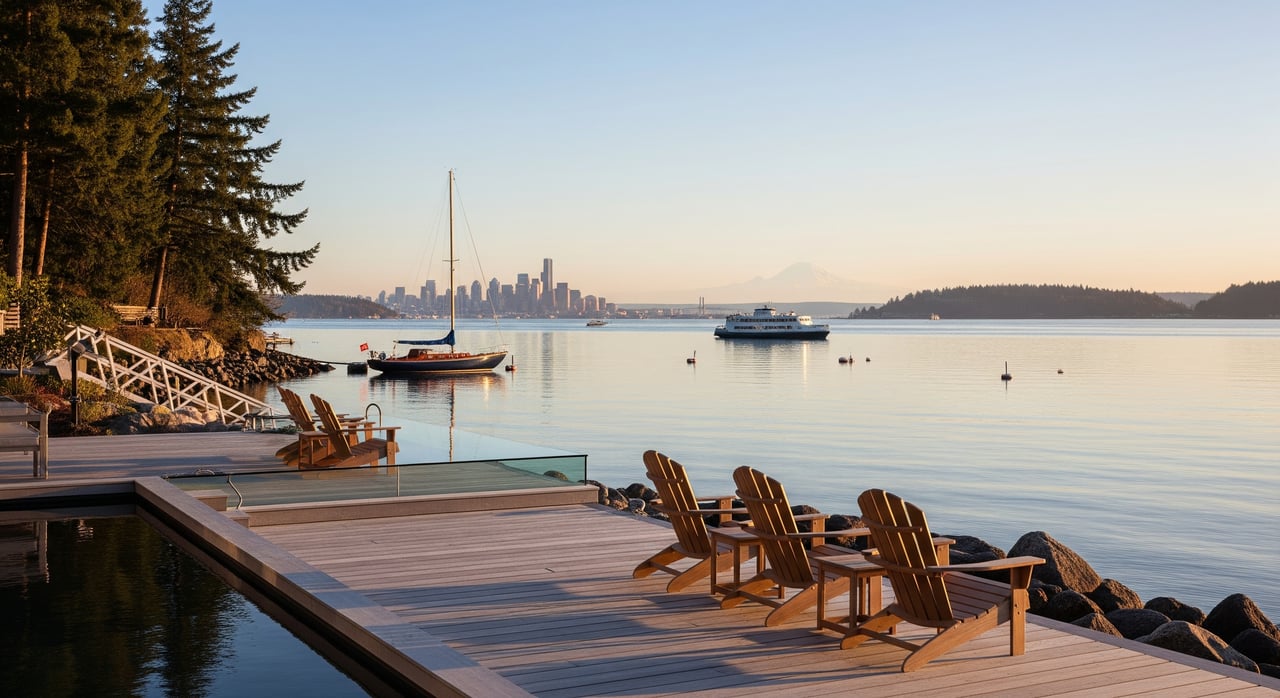
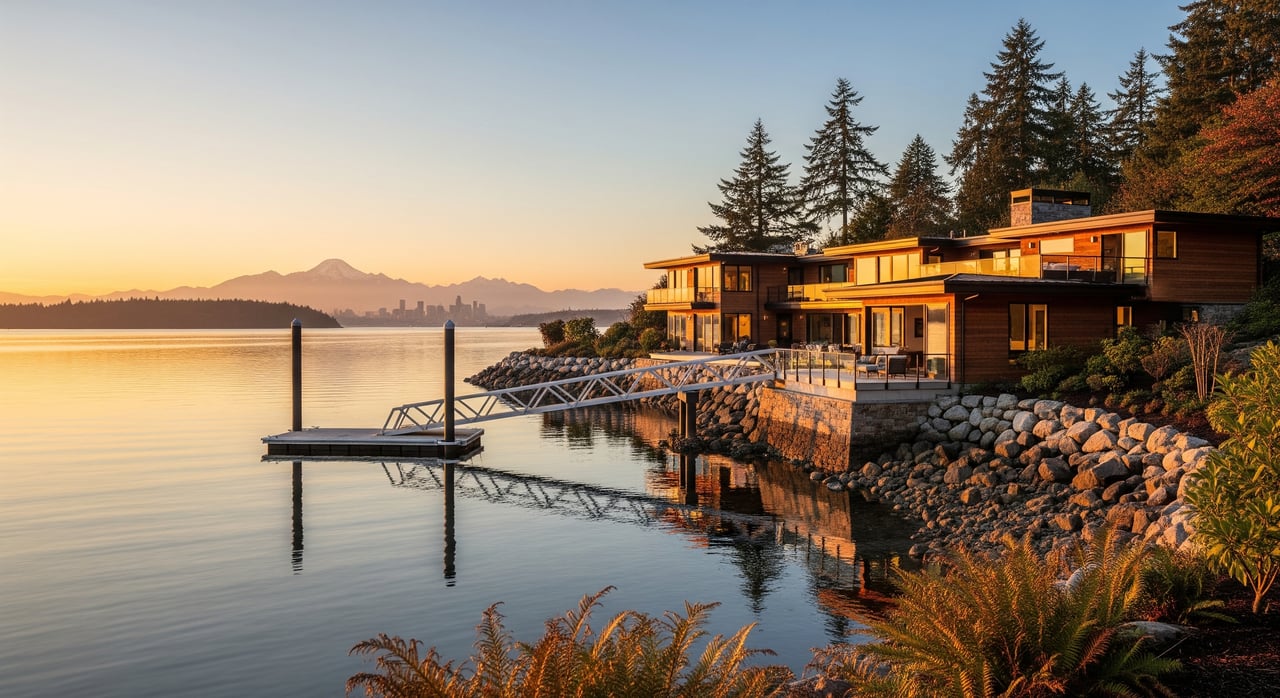
Bainbridge Island Market Report
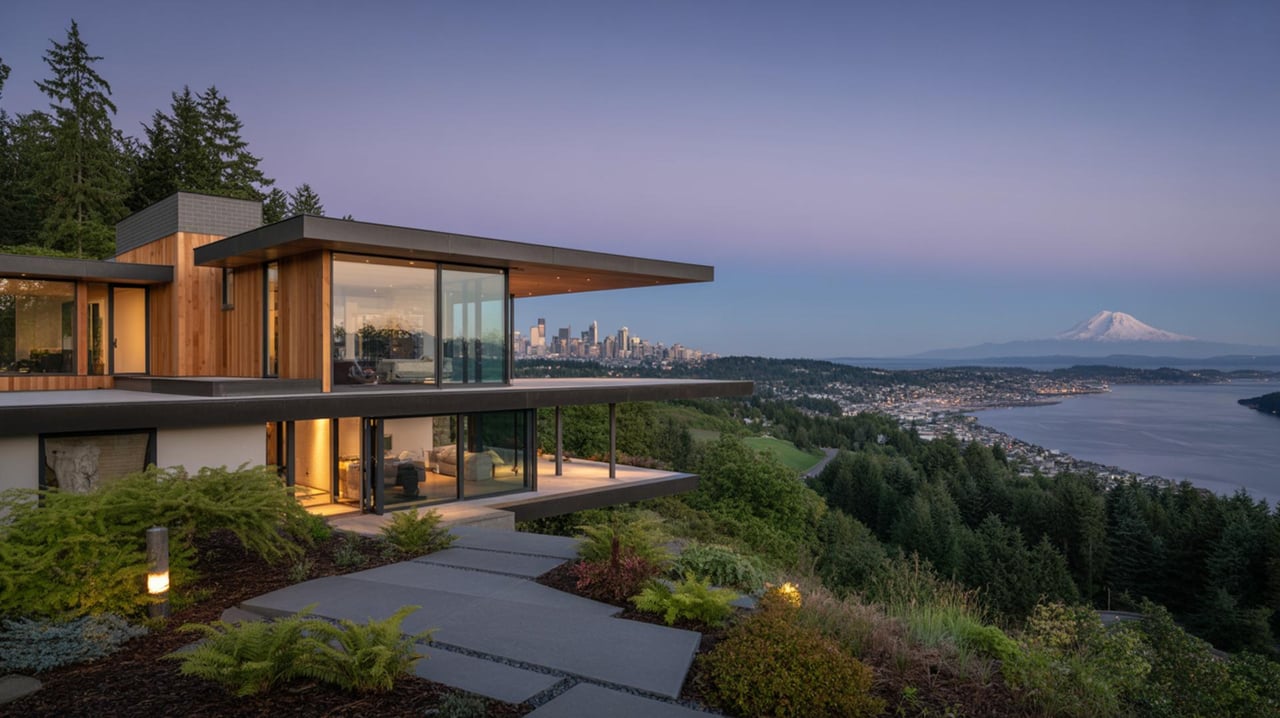
Selling Strategies
Expert Tips and Strategies for a Successful Home Sale in Seattle
Specializing in luxury and waterfront properties, Jake Aspinwall offers a refined, client-centered real estate experience. Reach out today to begin your bespoke real estate journey.

249 Winslow Way E #400 Bainbridge Island, WA 98110